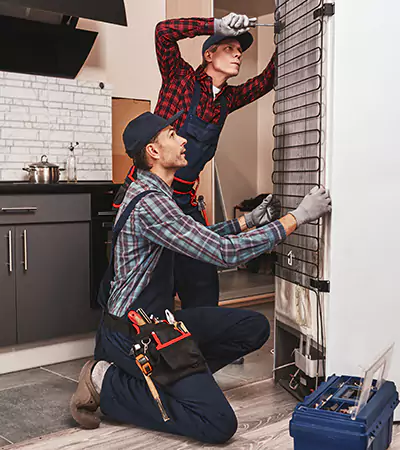
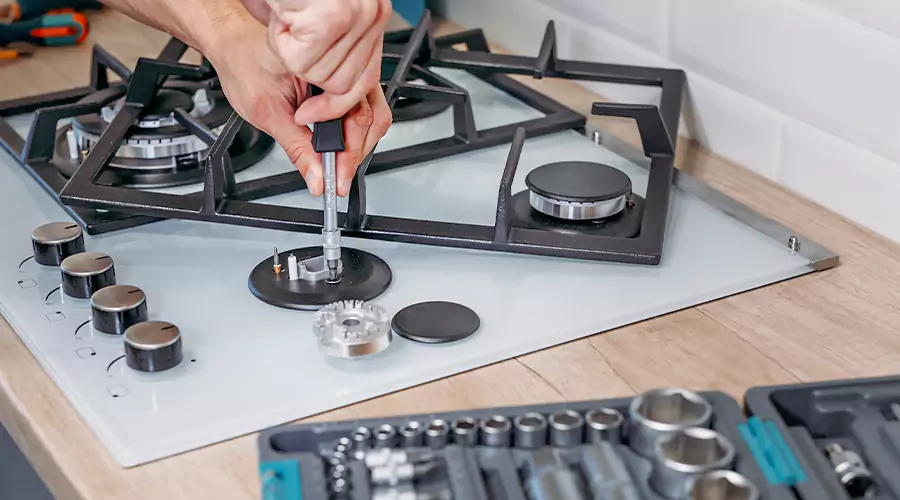
A gas stove igniter replacement can help when a burner will not spark or light properly. The igniter creates the spark that lights gas at the burner.
A dirty igniter can stop the burner from lighting. A cracked or loose igniter can also cause weak spark and may require professional gas stove repair. Safety must come first before replacing any gas stove part. Gas appliances use fuel and electricity.
Stop right away if you smell gas. Hire a professional if you feel unsure about the repair.
Common Signs of Igniter Trouble
Knowing how to replace stove igniter parts starts with understanding the symptoms.
Common warning signs include:
- The burner clicks but does not light.
- One burner works poorly while others work normally.
- The spark looks weak or uneven.
- The igniter tip looks cracked or dirty.
- The stove keeps clicking after the flame starts.
- You smell gas when trying to light the burner.
A gas stove not lighting issue should be checked quickly because unburned gas can create a safety risk.
Quick Troubleshooting Table
| Problem Sign | Possible Cause | Best Action |
|---|---|---|
| Burner clicks but will not light | Dirty igniter or burner cap | Clean and reposition parts |
| No clicking sound | Switch or wiring issue | Inspect safely |
| Weak spark | Faulty igniter | Replace the igniter |
| Constant clicking | Moisture or switch issue | Dry and inspect |
| Gas smell | Ignition failure | Stop and ventilate |
| One burner fails | Local igniter issue | Check that burner first |
Start With Basic Safety
A stove igniter not clicking problem may involve electrical parts, so unplug the stove before inspecting anything.
Turn off the gas supply if your repair requires moving the appliance or removing parts near the gas connection.
Follow these safety steps:
- Unplug the stove from the outlet.
- Turn burner knobs to the off position.
- Let the stove cool completely.
- Keep flames and sparks away from the area.
- Open windows if you smell gas.
- Call a professional if gas odor continues.
Basic gas stove safety tips can protect your home before the repair begins.
Check the Burner Before Replacing Parts
A gas burner igniter repair does not always need a new part. Food debris or grease can block the spark from reaching the gas.
Moisture can also stop proper ignition after cleaning. A burner cap that sits out of place can cause the same problem. Let the stove cool before you remove the grate and burner cap. Clean around the igniter with a soft brush or dry cloth.
Place the burner cap flat and centered before testing the burner again. A cap that sits unevenly can stop the burner from lighting.
Look for a Spark Igniter Problem
A stove spark igniter problem may show up as a clicking sound with no flame. Look closely at the ceramic igniter tip near the burner. If it is cracked, chipped, or loose, replacement may be needed. Do not use metal tools to scrape the igniter tip. The ceramic can break easily and create a bigger repair issue.
If the spark jumps away from the burner, the igniter may be misaligned. If no spark appears at all, the issue may involve wiring or the igniter switch.
When the Burner Will Not Ignite?
A burner won’t ignite when gas and spark do not meet correctly. The cause may be a clogged burner port, faulty igniter, weak spark module, or bad control switch. Try cleaning the burner ports with a soft brush. Avoid pushing debris deeper into the burner.
If cleaning does not help, inspect the igniter for damage. A damaged igniter usually needs replacement.
Gas Range Igniter Replacement Basics
A gas range igniter replacement should match the exact model of your appliance. Use the stove model number to find the correct part. The model tag may be under the cooktop, behind the storage drawer, or near the oven frame.
A wrong igniter may not fit correctly or may create poor spark performance. Before removing the old part, take a picture of the wire connection. This can help you reconnect the new igniter correctly.
How to Replace the Burner Igniter?
A faulty gas stove igniter is usually replaced by removing the burner assembly and disconnecting the old igniter wire.
The exact process depends on the stove design. Some cooktops allow easy access from the top, while others require lifting the cooktop panel.
General steps may include:
- Unplug the stove.
- Turn off the gas supply if needed.
- Remove the burner grate and burner cap.
- Remove screws holding the burner base.
- Lift the burner base carefully.
- Disconnect the old igniter wire.
- Install the new igniter in the same position.
- Reconnect the wire securely.
- Reassemble the burner parts.
- Restore power and test the burner.
Do not force parts if they feel stuck. Old screws and burner bases can break if handled roughly.
Stove Ignition Problems After Replacement
A stove ignition problem may continue after replacement if another part has failed. The spark module sends power to the igniters. The igniter switch tells the module when to spark.
If the new igniter still does not spark, the issue may be the switch, wiring, or spark module. A technician can test these parts safely and confirm the correct repair.
Gas Cooktop Igniter Repair
A gas cooktop igniter repair often starts with cleaning and drying the burner area. Alignment should also be checked before replacing parts.
Moisture is a common cause of clicking after stove cleaning. Let the burner area dry fully before testing the cooktop again. Unplug the appliance if the cooktop keeps clicking while all knobs are off. Constant clicking can point to a switch problem or moisture inside the control area.
Hire a professional when clicking continues after the cooktop dries. Gas and electrical parts need safe testing.
Gas Stove Troubleshooting
Basic gas stove troubleshooting should begin with simple checks before replacing parts.
Check the burner cap, burner ports, igniter tip, and power connection first.
Helpful checks include:
- Make sure the stove is plugged in.
- Confirm the burner cap is centered.
- Clean clogged burner openings.
- Dry the igniter area.
- Look for visible igniter damage.
- Test another burner for comparison.
These steps can help you decide whether the issue is cleaning related or part related.
Replace Gas Burner Igniter Safely
To replace gas burner igniter parts safely, avoid touching gas lines unless you are trained.
Some repairs only involve the top burner assembly. Others require deeper access into wiring and control parts.
If the burner base is rusted, stuck, or difficult to remove, stop and call a technician.
A simple part replacement can become expensive if screws break or wiring gets damaged.
Stove Burner Repair Options
A stove burner repair may involve more than the igniter.
The burner head may be clogged, the cap may be warped, or the gas port may be blocked.
If the flame is uneven after the burner lights, clean the burner parts and check alignment.
If the flame remains weak or yellow, professional inspection may be needed.
Appliance Repair for Gas Stove Issues
An appliance repair gas stove technician can test the igniter, switch, spark module, and wiring.
Professional service is a smart choice when the stove smells like gas, sparks constantly, or fails after basic cleaning.
A trained technician can also confirm whether the issue is electrical, mechanical, or related to gas flow.
Gas Range Repair and Switch Problems
A gas range repair may be needed when several burners stop sparking at the same time.
If all burners fail to click, the spark module or power supply may be the cause.
An igniter switch problem can also create clicking issues or prevent the igniter from firing.
Switches sit behind the burner knobs and connect to electrical parts. Testing or replacing them should be handled carefully.
Kitchen Appliance Repair Help
Professional kitchen appliance repair can save time when the cause is not obvious.
Gas stove ignition systems include igniters, switches, wiring, burner parts, and spark modules.
Replacing the wrong part can waste money and leave the stove unsafe.
If you smell gas, hear constant clicking, see damaged wiring, or cannot access the igniter safely, schedule service instead of continuing the repair.
Final Thoughts
Replacing a gas stove igniter can solve a burner that clicks weakly, fails to spark, or will not light.
Start with safe checks first. Clean the burner area, dry the igniter, confirm the burner cap position, and inspect the igniter tip.
If the igniter is cracked or not sparking, replacement may be the right fix. For gas odor, wiring problems, stuck parts, or repeated ignition failure, professional repair is the safer choice.